

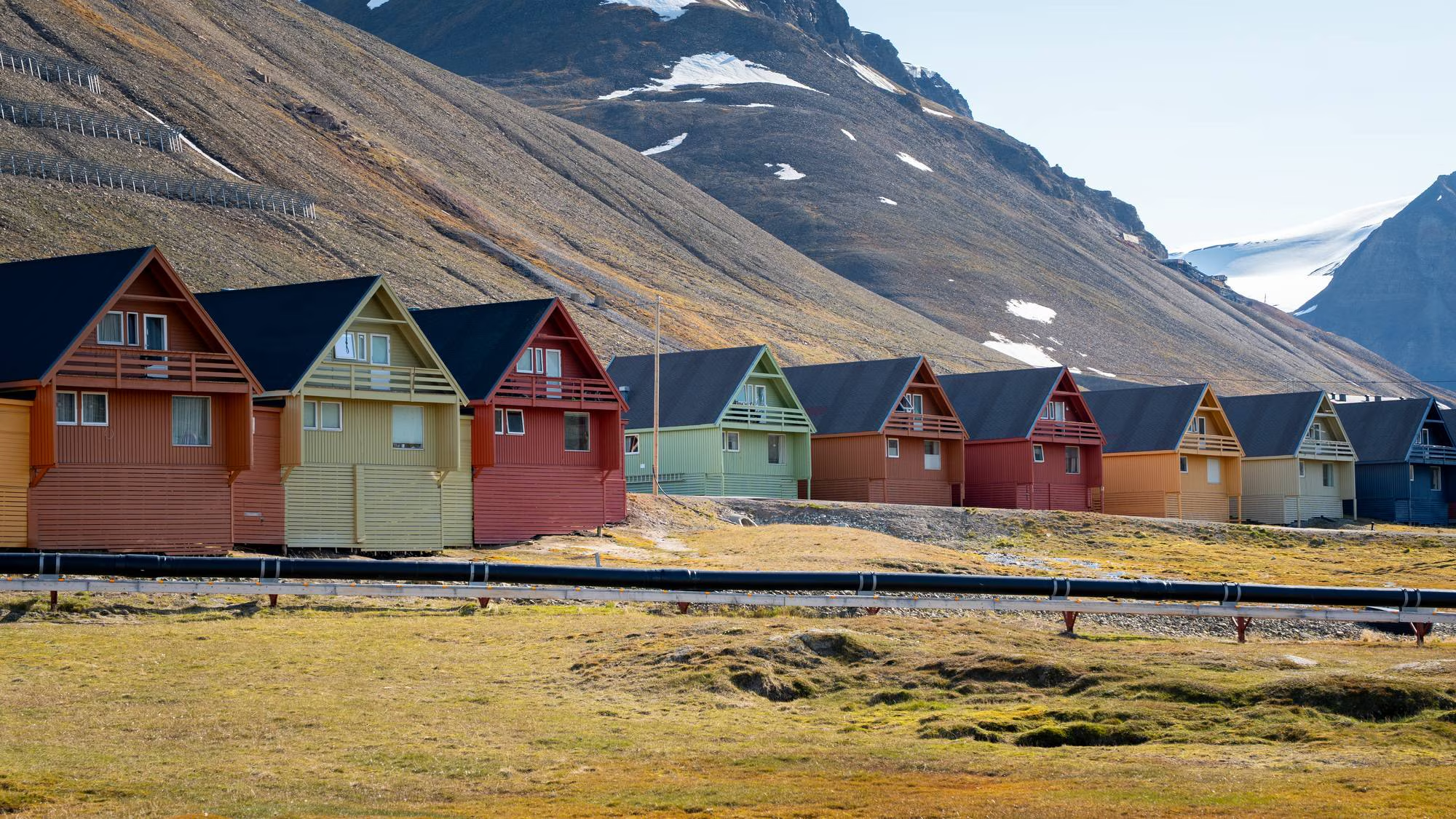

Svalbard had its sixth-warmest summer on record in 2026, with an average temperature of 6.9°C at Svalbard Airport, according to Norway’s Meteorological Institute (Meteorologisk institutt). The figure was 1.3°C above the 1991–2020 climate normal, while June set new temperature records at several monitoring stations across the Arctic archipelago.
Svalbard’s sixth-warmest summer
At Svalbard Airport, near Longyearbyen, the June-to-August period ranked as the sixth warmest since measurements began. The record remains the summer of 2024, according to the Meteorological Institute’s seasonal assessment.
The station was also the warmest of the Norwegian Arctic monitoring stations during the summer, with an average temperature of 6.9°C.
The highest temperature of the season was 15.4°C, recorded at Svalbard Airport on 31 July. The Meteorological Institute reported that the temperature had reached 13.6°C the previous day before rising further on 31 July.
Some initial news reports gave different dates for the 15.4°C reading, but the Meteorological Institute’s July report identifies 31 July as the day on which the seasonal maximum was recorded.
June brought new temperature records to Svalbard
The most unusual part of the summer came earlier in the season. June 2026 became the warmest June ever recorded at several stations on Svalbard.
The Meteorological Institute said the month ended with a particularly warm period, producing a series of records across the archipelago. Jan Mayen also recorded its warmest June since measurements began.
Climate researcher Ketil Tunheim said the results were consistent with the broader warming trend in the region.
“It is unfortunately not surprising that temperature records are being broken on Svalbard and Jan Mayen, since the Arctic is where warming is happening fastest,” he said in the Institute’s assessment of the summer.
The contrast with mainland Norway was considerable. While temperatures across Norway as a whole ended only slightly above the current climate normal, Svalbard experienced another distinctly warm season.
The Arctic is warming much faster than the global average
The latest summer adds to a sequence of unusually warm years in the High Arctic. In 2025, Svalbard had its fourth-warmest summer on record, after the three warmer summers of 2022, 2023 and 2024.
The Norwegian Polar Institute estimates that the Arctic has warmed around three times faster than the global average since 1979. The increase has been particularly pronounced in the northern Barents region, where temperatures in some areas are rising five to seven times faster than the global average.
On parts of Spitsbergen monitored by the institute, annual air temperatures increased by around 1°C per decade between 1991 and 2024. The Polar Institute describes Svalbard as the place on Earth currently experiencing the fastest temperature increase.
The effects extend beyond individual temperature records. Higher temperatures contribute to glacier loss, thawing permafrost, changes in sea ice and shifts in Arctic ecosystems, while also creating challenges for infrastructure built on permanently frozen ground.
The sixth-warmest summer therefore does not represent a new overall record for Svalbard. It does, however, continue a recent pattern in which exceptionally warm Arctic summers have become increasingly frequent.


