

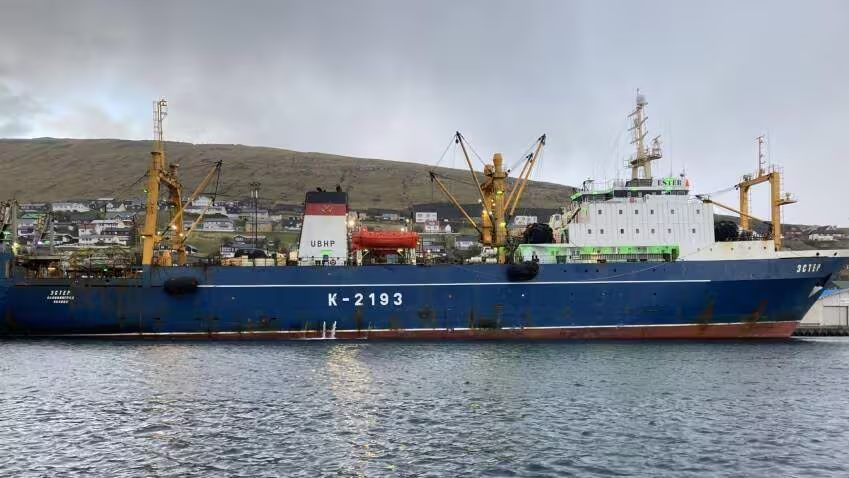

EU sanctions on Russia’s shadow fleet expanded on Thursday 18 December 2025, as the Council of the European Union added 41 vessels to its list of designated tankers, bringing the total to almost 600 ships. The measures include a ban on entering EU ports and restrictions on access to a broad range of maritime services, in an effort to curb revenues from Russian oil exports and limit sanctions evasion linked to the war against Ukraine.
What the new EU sanctions on the shadow fleet actually do
The newly listed ships face a port access ban across the EU and a prohibition on receiving services that are essential to operate normally in international trade. In practice, this can cover areas such as technical support, brokering, and other maritime-related services that underpin shipping operations, insurance arrangements, and logistics.
The Council said the measure is designed to target non‑EU tankers that are part of the shadow fleet used to circumvent the oil price cap mechanism or otherwise support Russia’s energy sector, which remains a key source of state revenue.
Why Brussels is targeting the “shadow fleet” now
Since the start of Russia’s full-scale invasion of Ukraine in February 2022, the EU has built a sanctions architecture aimed at weakening the Russian economy and disrupting the supply chains and funding streams supporting the war. Yet Russia has continued exporting large volumes of crude and refined products, often through routes and intermediaries that operate outside the standard Western maritime ecosystem.
The “shadow fleet” label is widely used to describe older tankers and opaque shipping structures that can involve complex ownership, limited transparency, and practices that make it harder to enforce sanctions consistently. These networks help move oil and petroleum products while reducing exposure to Western insurers, service providers, and compliance checks.
Thursday’s listings are part of the EU’s broader attempt to tighten enforcement where previous measures have been relatively easier to adapt to.
Beyond oil: EU says some vessels move military equipment and stolen goods
While energy exports remain the core focus, the Council linked the shadow fleet to additional security concerns. It said the targeted vessels may also be involved in the transport of military equipment for Russia, as well as in the movement of stolen Ukrainian grain and cultural goods taken from Ukraine.
This framing reflects a shift in EU messaging: the shadow fleet is not treated only as an economic workaround for sanctions, but also as a security and hybrid‑threat issue connected to wartime logistics and illicit trade.

A wider EU move tied to maritime security and undersea infrastructure
The Council’s decision is closely connected to other measures and political signals taken earlier this week. The EU recently listed nine “shadow fleet enablers”—individuals and entities accused of supporting the ecosystem that allows sanctioned oil flows to continue.
Member states also adopted a declaration calling for stronger use of the international law of the sea framework to respond to threats linked to the shadow fleet and to protect critical undersea infrastructure.
For Nordic and Baltic countries, this dimension is particularly sensitive: key energy and telecommunications links in the region rely on undersea cables and pipelines, and concerns about vulnerabilities in the Baltic Sea have grown since the start of the war.
Where this fits in the EU’s Russia sanctions strategy
According to EU institutions and Reuters reporting, this step forms part of the bloc’s 19th sanctions package since February 2022. The repeated expansion of ship listings underlines a central EU assessment: Russia’s ability to sell oil abroad, even at discounts, remains a major constraint on the effectiveness of Western economic pressure.
At the same time, the EU has signalled that further measures remain on the table. The Council said it is ready to step up pressure on Russia and the shadow fleet value chain, including with additional sanctions.
What happens next: enforcement, flags and compliance gaps
The impact of ship designations will depend on implementation and enforcement across ports, service providers and maritime regulators. Shipping is a global industry, and the effectiveness of EU restrictions often hinges on whether vessels can access alternative services outside the EU—and how quickly companies adjust ownership structures, flags, routes and documentation.
In the near term, the EU’s expanding list is expected to increase compliance pressure on maritime operators that still touch European jurisdictions, while also raising political costs for actors who facilitate Russia-linked oil transport.
For Europe’s northern member states, the move is likely to be read not only as an energy and sanctions measure, but as part of a wider strategy to address hybrid risks at sea, where economic sanctions, maritime safety and security concerns increasingly overlap.


